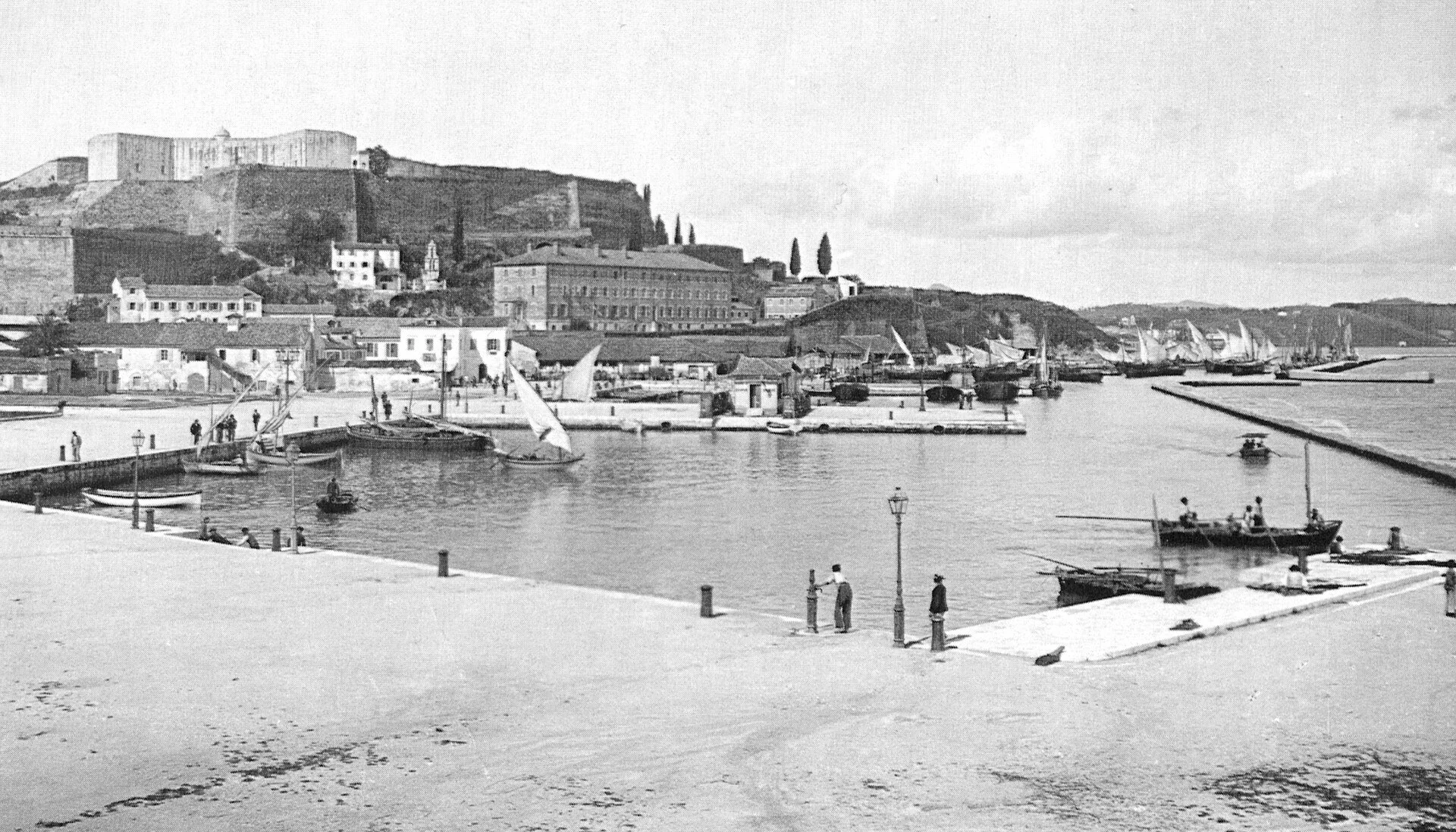
Corfu occupied a distinctive place in Britain’s nineteenth-century Mediterranean world. From 1815 to 1864, it was the capital of the United States of the Ionian Islands under British protection and the seat of the British Lord High Commissioner. When the islands were united with Greece in 1864, Britain’s position changed fundamentally: a governing power became a foreign diplomatic presence within the Greek state. The Corfu case study explores how that transition was experienced locally. It examines the people, property, commercial interests and institutional relationships that connected the island to Britain after the end of the protectorate. Situated between the Adriatic, the Greek mainland and the Italian peninsula, Corfu also offers a valuable vantage point from which to study the movement of information, goods and people across the Mediterranean.
FURTHER READING
Aggelis Zarokostas. “Islands in a ‘State of Emergency’: Ionian Neutrality and Martial Law during the Greek Revolution.” Journal of Modern European History 21, no. 2 (2023): 238–250
Gekas, Sakis. Xenocracy: State, Class, and Colonialism in the Ionian Islands, 1815–1864. (New York: Berghahn Books, 2017)
Thomas W. Gallant, Experiencing Dominion: Culture, Identity, and Power in the British Mediterranean (Notre Dame, IN: University of Notre Dame Press, 2002)