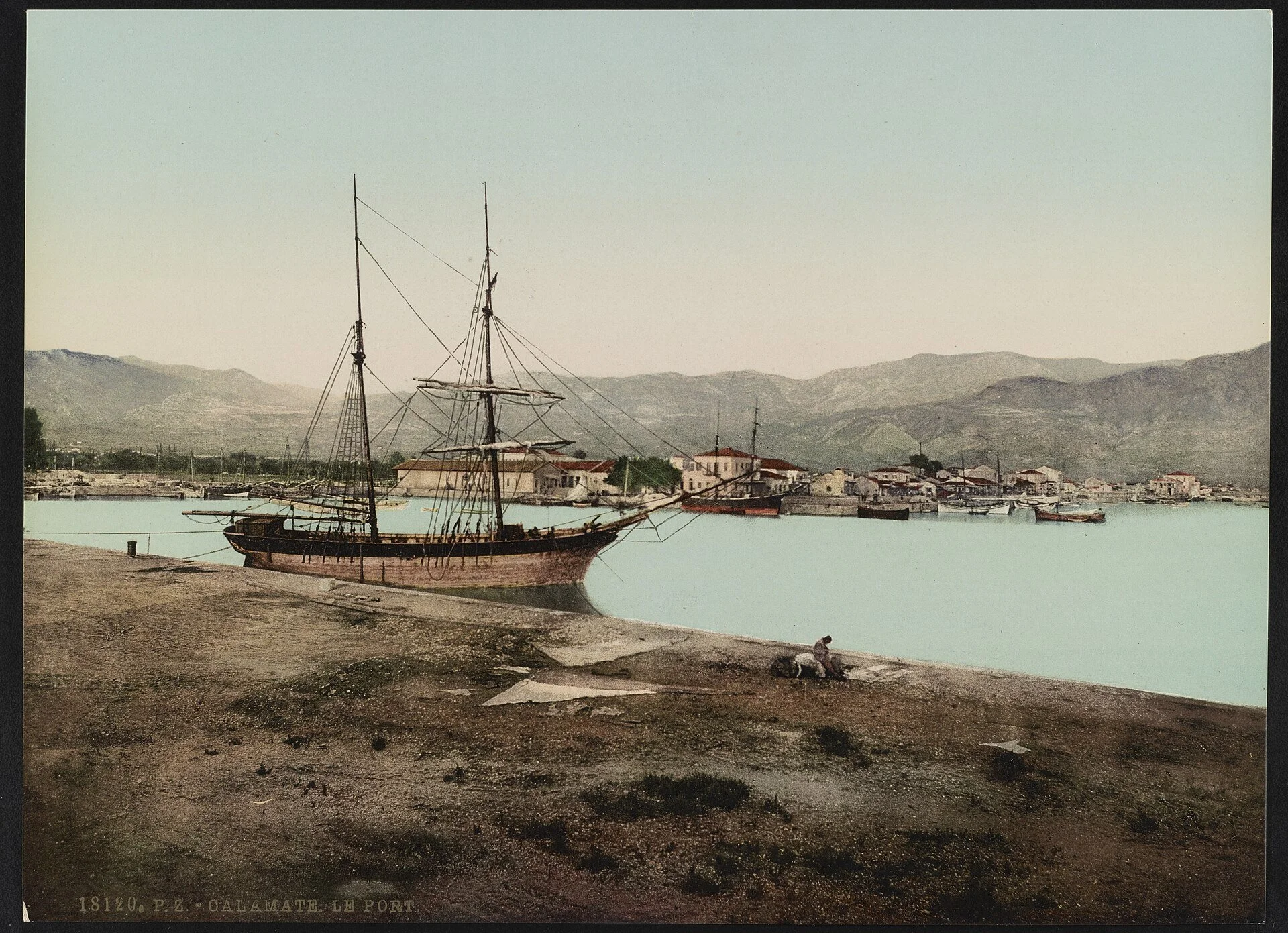
Nineteenth-century Kalamata connected the agricultural economy of the southwestern Peloponnese with the wider Mediterranean. Olive oil, silk, figs, other regional products moved through its commercial networks, linking local producers and merchants with ports including Malta, Livorno, Marseille and Tunis.
British consular representatives observed these connections from a city whose prosperity depended upon its surrounding countryside. They reported on harvests, commodity prices, shipping and local economic conditions; assisted British merchants and vessels; and maintained relationships with municipal authorities, commercial families and representatives in neighbouring ports.
Kalamata’s merchants also formed extensive family networks demonstrating that international trade was built as much upon personal relationships as upon formal institutions.
The expansion of the port and railway at the end of the century strengthened the relationship between the city and its hinterland. Through consular and commercial archives, this case study explores how diplomacy operated in a smaller provincial port and how information collected in Kalamata entered networks extending to Patras, Athens, Malta and London.
FURTHER READING
Chatziioannou, Maria Christina. “Shaping Greek-Tunisian Commercial Relations in the Ottoman Mediterranean World: The Efessios Merchant House.” International Journal of Maritime History 19, no. 1 (2007): 161–180.
Gekas, Sakis. “Class and Cosmopolitanism: The Historiographical Fortunes of Merchants in Eastern Mediterranean Ports.” Mediterranean Historical Review 24, no. 2 (2009