SYROS: Consuls, Commerce and the making of a Mediterranean port
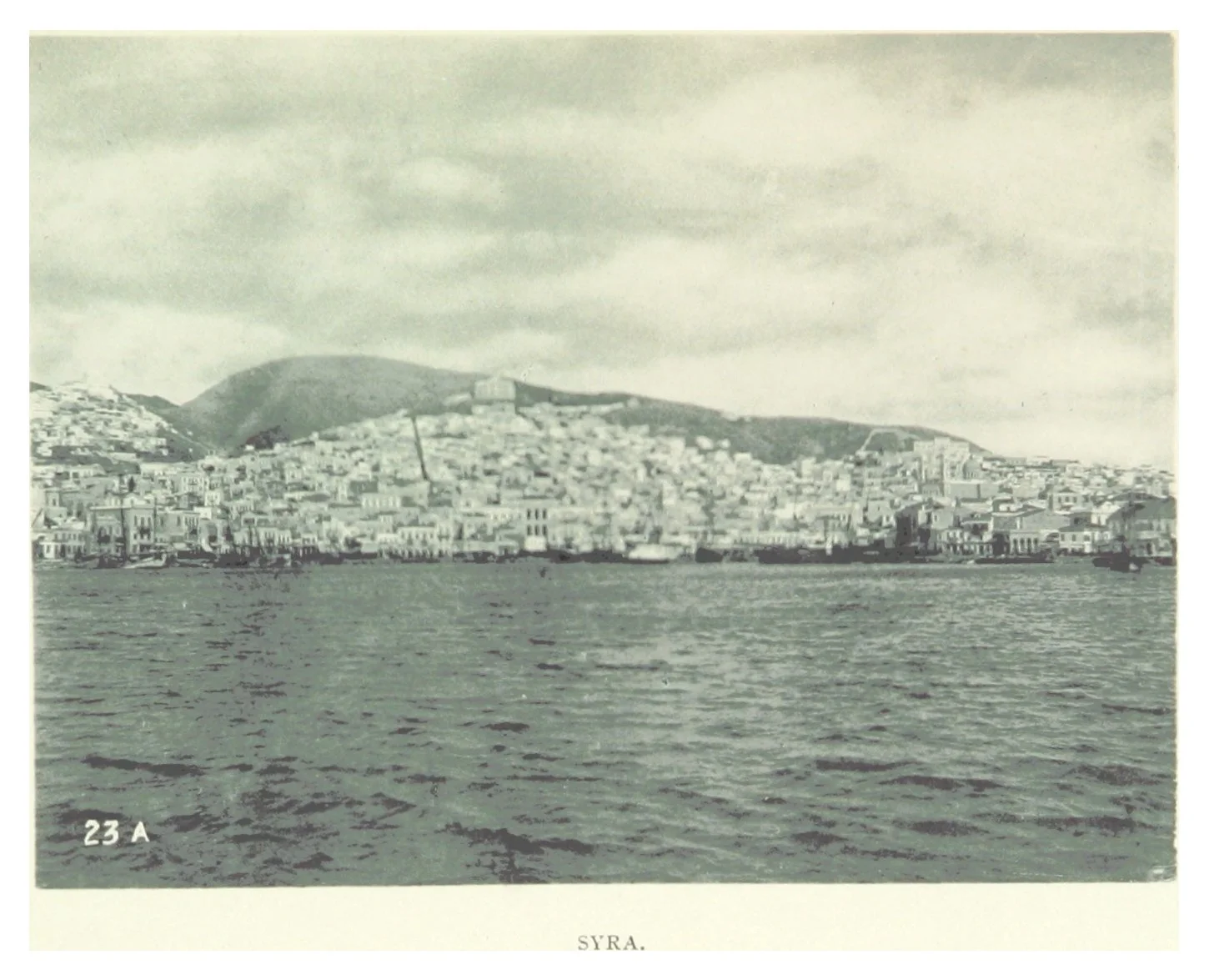
Known to many nineteenth-century Europeans as Syra, the island occupied an unusual position in the Aegean. Its long-established Catholic community connected it to networks extending across the Ottoman Mediterranean and Catholic Europe, while overlapping religious, diplomatic and political jurisdictions made the island a particularly revealing site in the transition from empire to nation-state (Kousouris, 2025).
The Greek Revolution transformed an older landscape. Ermoupolis, created largely through the arrival of refugees, developed with extraordinary speed into the Greek kingdom’s leading commercial port and one of the principal entrepôts of the eastern Mediterranean. Its merchants and shipping connected the new state to markets across the Mediterranean and Black Sea, while its rapid urban growth produced a distinctive commercial and social world (Loukos, 2022). Syra offers an unusually rich setting in which to examine consuls in action: as intermediaries between merchants, local communities, foreign governments and the emerging Greek state, operating in a port whose prosperity depended upon connections extending far beyond the kingdom’s borders.
Further Reading
Dimitris Kousouris, The Island of the Pope: Catholics in the Aegean Archipelago between Empire and Nation-State, 1770–1830 (Berghahn Books, 2025).
Christos Loukos, I Ermoupoli tis Sirou (1821-1950): Apo to Liverpool tis Anatolikis Mesogeiou sti vamvakoupoli ton Kikladon (Crete University Press, 2022).